
 Image
Robot foundation model
🇺🇸 Physical Intelligence United StatesResearch
π0 / π0.5
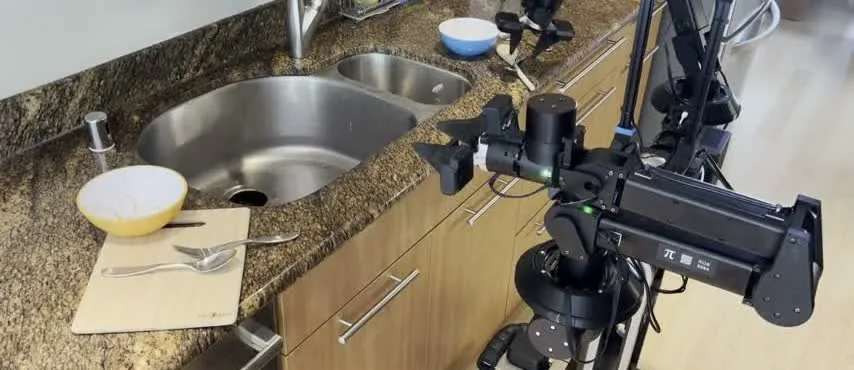
VLA models; π0.5 targets generalization to unseen homes. Weights and code are released via openpi.
Price
Quote only
General-purpose robot foundation models (π)
US startup founded by alumni of Google DeepMind and others, building general robot foundation models. π0 and π0.5 are released openly as openpi. Its latest model is π0.7 (April 2026), and since October 2026 it has offered its latest models to outside users through the Pi API beta. It supplies intelligence for other companies' hardware rather than building robots itself. In March 2026 Bloomberg reported talks to raise funds at a valuation above $11B, and in October talks at about $20B were reported; neither has been finalized.
Researched as of November 3, 2026. Each item links to its source.
Bloomberg reported talks to raise at least $1B at about a $20B valuation; the company has not confirmed.
Source: thenextweb.comLaunched the Pi API beta: upload data, fine-tune on PI-managed compute and run inference through a hosted gateway.
Source: pi.websiteAnnounced π0.7, a generalist matching fine-tuned specialists on dexterous tasks and showing compositional generalization to unseen commands and tasks.
Source: pi.websiteLaid out its plan to be the 'physical intelligence layer' for other companies' robots, showcasing live deployments with Weave (laundry) and Ultra (warehouse).
Source: pi.websiteRaised $600M in a CapitalG-led round at a reported $5.6B valuation.
Source: bloomberg.comReleased π*0.6, which uses reinforcement learning from real-world experience to raise success rates.
Source: pi.websiteImageVLA models; π0.5 targets generalization to unseen homes. Weights and code are released via openpi.
 Image
PI's previous-generation model, succeeded by π0.7 in April 2026. It improved task decomposition, prompt adherence and recovery; a warehouse demo reportedly reached 96.4% autonomy over an eight-hour shift.
Ultra rents its stationary dual-arm OP1 robots monthly, with AI supplied by Physical Intelligence; it reports more than 500,000 orders packed across New York, Georgia, New Jersey and Texas, handling up to 30% of volume at Highline Commerce in Brooklyn.
In February 2026 PI reported that Weave's laundry-folding robots in San Francisco laundromats cut human interventions by 50% using π0.6 trained with Weave-specific data.
Just tell us what you want to do — move parts in a factory, automate inspection rounds. We'll propose robots, a quote and a development plan.
We usually reply within 2 business days